Monday, April 23, 2012

Coaching Workshop

Coaching is a highly valued skill in the LK10 Community.  By "coaching", we mean the skill of helping a person get clear about what God is saying and doing in their life.  For this reason, we are thrilled to offer to you The Coaching Workship which will be led by Dr. Walt Hastings who is a member of the LK10 Leadership Team.  See below for the details.  Hope to see you there!


John


 Integrating Coaching Skills into Your Leadership Roles

Saturday, May 19th
8:30 AM – 4:30 PM
Abundant Life Christian Church
7100 Wadsworth Blvd., Arvada, CO 80003

   Sponsored by  
  The LK10 Community

      Led by           
Dr. Walt Hastings
E-Mail: walthastings@hotmail.com
                                                                                    Questions? Call Walt at: 303-526-9490


What will this workshop will do for you?
Transformational leadership requires new ways of communicating with
those with whom you work. Coaching skills are essential. This one-day
workshop is for anyone who wishes to incorporate coaching skills into
their existing roles. 
Who Should Attend?
Those who desire to empower, equip, encourage, and support others.
What will be the Outcome?
Using coaching skills, you will be able to support people to:
·      Gain focus / Make better decisions                    
·      Move from vision to action / Achieve goals faster
·      Broaden perspectives for innovative solutions
·      Learn new skills to take the next step.
This will in turn result in increased effectiveness, more teamwork,
higher morale, and greater impact. 
- - - - - - - - - - - - - - - - - - - - - - - - - - - - - - - - - - - - - - - - - - - - - - - - - - - - - - - - - - - - - - - - - - - - - - - - - - -
Registration
Name ______________________________________________ Phone ___________________
Church or Organization _______________________________Area of Ministry _____________ Address __________________________________City ______________ State ___ Zip_______
E-Mail ________________________________________  Phone ________________________
Registration Cost  (includes The Coach Model book by Keith Webb, workbook, lunch & snacks) * Early registration - $50.00 * Late registration - $60.00 (after May 10th) * Church group rate (up to 10 persons) - $300 before May 10th; $400 after May 10th
Payment:  ___ Check (made out to: Walt Hastings; mail to 24885 Genesee Ave., Golden, CO 80401)
          ___ Credit Card (Indicate credit preference. Invoice will be e-mailed via PayPal)


Tuesday, April 17, 2012

Church - incompatible with genuine community?

15 years ago, Jeff and Mary Power finished seminary and moved to the suburb of Broomfield, CO (between Denver and Boulder) with the vision of starting a church that functioned as a genuine community.  Ten years later two things were true...

1.  Jeff and his leadership team were exhausted.
2.  They had concluded that the demands of starting and maintaining a traditional church (preaching great sermons, developing meaningful programs, recruiting people, etc.) were incompatible with their vision of genuine community.

As a result, Jeff and his leaders decided to close the church down.

Over the next five years, a number of people in that church remained friends.  Recently, they asked us to help them explore the idea of starting house churches in Broomfield.

Jeff is not alone.  More than 1500 pastors a month are leaving the ministry in America.  Many are questioning if the standard paradigm of church is either consistent with Scripture or healthy for the people involved.

Here's Jeff's story...


For more on this topic see these posts ...

*The story of another pastor who resigned his church.  "Mega church pastor:  "We are completely off base with what discipleship means".   http://storiesfromtherevolution.blogspot.com/2011/09/mega-church-pastor-we-are-completely.html

* "Increasing number of American's are saying "No!" to traditional church". http://storiesfromtherevolution.blogspot.com/search/label/end%20of%20traditional%20church

* "The end of church planting".  http://storiesfromtherevolution.blogspot.com/2011/11/end-of-church-planting.html

Sunday, March 25, 2012

Basic training in organic church life

Registration is open for two LK10 Courses.

Foundations One:  This is a six week virtual learning community covering the basic values and practices of organic church life.  In the video below, Sean Hyatt, who will be leading the course, explains what is involved.  This class begins on April 2nd and is limited to the first 15 registrations.  Cost: $100 for individuals.  $150 for couples.  See column to the right for more information and to register.

Foundations Two:  This is also a six week virtual learning community which goes deeper into the basic values and practices of organic church life.  The course will be led by Walt Hastings.  It begins on April 22nd and is limited to the first 15 registrations.  Cost:  $100 for individuals.  $150 for couples.  Prerequisite for Foundations Two is the completion of Foundations One.  See column to the right to register.


Each Foundation Course takes place in the context of a small "learning community" (6 to 15 people) called a cohort.  The Course lasts for six weeks.  Here are the key elements...

1.  Weekly learning assignments.  Articles to read and videos to watch that explain "foundational" practices and the Biblical basis. 
2.  CO2 (Church of Two).  This might be a married couple or two men or two women.  For six weeks, you will practice key rhythms daily with this one other person.  Our conviction is that the CO2 is the basic building block of all larger expressions of church.  We are following Jesus' model of putting people in pairs (Mt. 10) and sending them out together.  For more information on the CO2, see the CO2 video and flyer in the right column of this site.
3.  Online Forum (Facebook Group, etc).  Regular posting to a forum where you discuss insights, comments, experiences, questions with the rest of your cohort.
4.  Individual Coaching Appointments with the leader of your cohort.  At least two one-on-one sessions during the Course.  We want you to experience the value of this kind of coaching.
5.  Conference calls with your cohort.  At least two calls with your cohort during the Course to share comments, experiences and questions with the rest of your cohort.

Tuesday, March 20, 2012

10:2b Virus Spreading to African Leaders

What's the key to CPMs (Church Planting Movements)?


Humanly, the answer is "leaders".  Effective leaders are required for healthy churches to be planted.


Where do those leaders come from?


Only one place.  They are sent out by the Lord of the harvest.


What's our part?


To do what Jesus commanded and "Beseech the Lord of the harvest to send out those leaders".


This has come to be known as "The 10:2b Prayer" and it's spreading around the world like a benevolent virus.


In this video, Hugh Brandt shares the 10:2b Prayer with leaders of Campus Crusade in Africa.


Thursday, March 1, 2012

Church is changing!

A couple of weeks, ago I shared with you these important quotes from a recent article in The Huffington Post (of all places!)…

Something startling is happening in American religion:  We are witnessing the end of church or, at the very least, the end of conventional church.  The United States is fast becoming a society where Christianity is being reorganized after religion.

But there is good news in this article…

But nearly half of Americans appear to hope for a spiritual reformation – even revolution…  there is a grassroots desire for new kinds of faith communities, where institutional structures do not inhibit or impede ones relationship with God or neighbor.


And that’s where LK10 comes in.  Our mission is to train people for these “new kinds of faith communities”.

One of the main ways we do this is through the Foundation Courses.  These Courses teach a new paradigm of church in the context of a vital learning community.

If you haven’t been in one of these Courses yet, you can get a good picture of what it’s like from this interview with Sean Hyatt


Tuesday, February 28, 2012

Class on "Learning to hear God's voice"

Jim Mellor and I (John White) will be leading an adult Sunday School class at Greenwood Community Church on "Learning to hear God's voice".

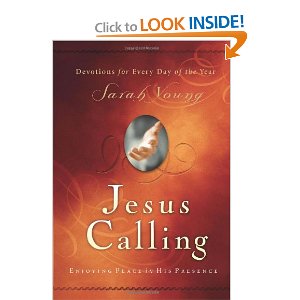
Jesus said, "My sheep hear my voice."  John 17:27.  This class will be a "community of practice" for those who desire to grow in their ability to hear His voice.  "This practice of listening to God has increased my intimacy with Him more than any other spiritual discipline." says Sarah Young.  We will use Sarah's daily devotional Jesus Calling as a spring board to practice listening prayer.

Class begins March 11 and concludes May 6.  No class on April 8.  Sundays at 11am in the Longs Peak Room.

Monday, February 27, 2012

Seth Godin: The definition of a revolution

The name of this blog is "Stories From the Revolution".  It's taken from George Barna's book, Revolution.


Concerning this revolution, Barna writes, "(It is) an unprecedented reengineering of America's faith dimension that is likely to be the most significant transition in the religious landscape that you will ever experience."


Seth Godin gives us further insight into the nature of revolutions:


Perfect and impossible

The definition of a revolution: it destroys the perfect and enables the impossible.

The music business was perfect. Radio, record chains, Rolling Stone magazine, the senior prom, limited access to recording studios, the replaceable nature of the LP, the baby boomers... it all added up to a business that seemed perfect, one that could run for ever and ever.

The digital revolution destroyed this perfect business while enabling the seemingly impossible: easy access to the market by new musicians, a cosmic jukebox of just about every song ever recorded, music as a social connector...
If you are in love with the perfect, prepare to see it swept away. If you are able to dream of the impossible, it just might happen.

Sunday, February 19, 2012

Increasing number of Americans are saying "No!" to traditional church

Check out this remarkable article from The Huffington Post:

Something startling is happening in American religion: We are witnessing the end of church or, at the very least, the end of conventional church. The United States is fast-becoming a society where Christianity is being reorganized after religion.
In recent decades, untold numbers of people have left the Roman Catholic Church. In a 2008 survey, Pew research found that one in 10 Americans now considers themselves an ex-Catholic. The situation is so dire that the church launched a PR campaign inviting Catholics to "come home," to woo back disgruntled members. There was a slight uptick in Catholic membership last year, mostly due to immigrant Catholics. There is no data indicating that Catholics are returning en masse and much anecdotal evidence suggesting that leaving-taking continues. Catholic leaders worry that once the new immigrants become fully part of American society they might leave, too.
The end of church, however, is not merely a Catholic problem. For decades, mainline Protestants have watched helplessly as their membership rolls dwindled, employing program after program to try to stop the decline. In the last 15 years, conservative Protestant denominations have witnessed significant erosions in membership, money and participation -- with some of the greatest drops in groups like the Southern Baptist Convention that once seemed impervious to decline. In a typical week, less than a quarter of Americans attend a religious service, down from the half of the population who were regular churchgoers a generation ago.
There are successful individual congregations -- Catholic or Protestant, mainline or evangelical, liberal or conservative, small or large -- everywhere. But the institutional structures of American religion -- denominations of all theological sorts -- are in a free-fall.
The religious market collapse has happened with astonishing speed. In 1999, when survey takers asked Americans "Do you consider yourself spiritual or religious," a solid majority of 54 percent responded that they were "religious but not spiritual." By 2009, only 9 percent of Americans responded that way. In 10 years, those willing to identify themselves primarily as "religious" plummeted by 45 percentage points.
In the last decade, the word "religion" has become equated with institutional or organized religion. Because of crises such as the Sept. 11 terrorist attacks and the Roman Catholic abuse scandal, Americans now define "religion" in almost exclusively negative terms. These larger events, especially when combined with increasing irrelevance of too much of organized religion, contributed to an overall decline in church membership, and an overall decline of the numbers of Christians, in the United States.
There may be hope, however, regarding the future of faith. Despite worry about the word, "religion," Americans are extremely warm toward "spiritual but not religious" (30 percent) and, even more interestingly (and perhaps paradoxically), the term "spiritual and religious" (48 percent). While "religion" means institutional religion, "spirituality" means an experience of faith. Large numbers of Americans are hankering for experiential faith whereby they can connect with God, the divine, or wonder as well as with their neighbors and that lead to a more profound sense of meaning in the world. Maybe Americans once called this "religion," but no more. Americans call it "spirituality."
Some Americans want to be spiritually left alone, without complications from organized religion. But nearly half of Americans appear to hope for a spiritual reformation -- or even revolution -- in their faith traditions and denominations. Congregations that exhibit a vibrant spiritual life embodying a living faith in practical ways succeeding, even in the religion bear market. These sorts of communities are models of what might be possible to renew wearied organizations. But the macro-structures of American faith -- denominations -- have yet to hear this message. They are still trying to fix institutional problems and flex political muscle instead of tending to the spiritual longings of regular Americans.
"Spiritual and religious" expresses a grassroots desire for new kinds of faith communities, where institutional structures do not inhibit or impede one's relationship with God or neighbor. Americans are searching for churches -- and temples, synagogues, and mosques -- that are not caught up in political intrigue, rigid rules and prohibitions, institutional maintenance, unresponsive authorities, and inflexible dogma but instead offer pathways of life-giving spiritual experience, connection, meaning, vocation, and doing justice in the world. Americans are not rejecting faith -- they are, however, rejecting self-serving religious institutions.
The end of conventional church isn't necessarily a bad thing. Christianity after religion, a faith renewed by the experience of God's spirit, is closer to what Jesus hoped for his followers than the scandalous division, politics, and enmity we have now. Will there still be Christianity after the end of institutional religion? Yes, there will be. But it is going to be different than what Americans have known, a faith responsive to the longings of those who are expecting more spiritual depth and greater ethical integrity rather than more conventional church. Indeed, I suspect that the end of church is only the beginning of a new Great Awakening.

Monday, February 6, 2012

Powerful new insights on how to resist the devil

Too often we separate Scripture and spiritual principles from the real world.  As a result, these principles loose much of their power.  For instance, James 4:7 tells us to "resist the devil and he will flee from you".

But, how exactly to we do this?  

No doubt, James had in mind real life examples of combat when he wrote these words.  No doubt, he had seen someone physically attacked and he could picture the one being attacked resisting the attacker.  (In the Greek, "resist" is a compound word:  anti + istemi.  Literally, "to stand against".)  Seeing a literal picture of someone resisting or standing against an attacker gives us powerful insights into how to engage in spiritual warfare against the devil.

Here's an example.  In this short video, Tony Blauer, an expert in personal self-defense, demonstrates a key skill in resisting.  Here are some things that I notice.

1.  Perhaps most important is Tony's attitude.  Because he is both conditioned and skilled, he exudes confidence.  He isn't "quaking in his boots" at the prospect of being attacked.  If anything, the attacker is in for a rude awakening.  This reminds me of Jesus' attitude during his encounter with the devil in Matthew 4.  Can you picture yourself having this same confident attitude?

2.  Resisting requires particular skills.  In this video, Tony is teaching "Outside 90".  What skills are necessary to resist the devil?

3.  Resisting requires that we practice the skills of combat.  Just knowing the theory isn't enough.  We must become practitioners.  We know that God is infinitely more powerful than the devil and could get rid of him at any moment.  Why doesn't He?  At least one reason is that we need an opponent to grow stronger and more skilled.  (1 Peter 5:8 even calls the devil our "opponent" or "adversary".)

What else to you learn about "resisting the devil" from this video?


Thursday, January 26, 2012

Tony Dale: LK10 adds the personal touch

House2House Ministries and the LK10 Ministries are two of the organizations serving the growing house church movement.  While I (John White) am the Director of LK10, I also serve on the Board of Directors of House2House.

A couple of weeks ago I was in Austin, TX for a meeting of the Board of House2House at Tony and Felicity Dale's home.  Tony and Felicity are good friends and we've been involved with them in the house church movement for over twelve years.

In this video, I asked Tony to comment on some of the ways that these two ministries compliment each other.  One of his observations was that LK10 adds "the personal touch".  And, that's exactly right.  I wish you could see what is going on in the Foundations One Courses that just started.  These are small virtual groups of 8 to 12 people (we call them cohorts) where people are learning in the context of community.  In addition to the "personal touch" of the cohort community, each person receives one on one coaching every other week.  If this sounds good to you, consider being part of next round of courses.


Update from the LK10 Equipping Center:

*Two Foundation One Courses are just starting up with participants from Colorado, Texas, Alabama, South Carolina, Minnesota, Florida and Alberta (CAN).  One of the amazing things we've learned from these Courses is how significant community can develop in these virtual learning environments.  We'll let you know when new Courses are starting.

*A Foundations One Course will soon be starting with leaders from several African countries.

*We've had to postpone the beginning of The Family Blessing Course.  We'll let you know the new start date.

Monday, January 16, 2012

The Family Blessing - Part 2

John White interviews Tim Pynes about the details of his new class that LK10 is offering.  The class is called The Family Blessing: Reclaiming the Home as the Center for Spiritual Training.


To register for this new class, please visit this link: http://familyblessing.eventbrite.com/

Monday, January 9, 2012

New Course offered: "The Family Blessing"

Registration is now open for a new session of our Foundations One Course.  For information about this Course and how to register, see the right column.

In addition, we are excited to offer, for the first time, a new Course called "The Family Blessing"which will be led by one of our LK10 Coaches, Tim Pynes. The mission of LK10 is to see "a vibrant family of Jesus within easy reach of every region and people group".  This Course is an important resource towards that objective.  ("The Family Blessing" applies LK10 practices specifically in a family context whereas "Foundations One" has a broader focus.)

For information about the course and how to register, see below...


The Family Blessing - Part 1

I (Tim Pynes) was in Israel over the summer and one night, in Tel Aviv, I witnessed an amazing scene in the restaurant at the hotel where we were staying. It was Friday evening and the hotel restaurant was packed with hundreds of people of all kinds. After going through the buffet line and sitting down at a table to eat, I noticed a family of Orthodox Jews stand up at their table near me and begin to pray. As I watched them, the mother of the family pulled a shawl over her head and lit a candle. In that moment, it occurred to me that the sun had just set and the sabbath had begun. I turned in my chair and saw that there were Jewish families interspersed throughout the hotel restaurant who were standing at their tables and also beginning the shabbat meal ritual. These Jewish families seemed unaware and unconcerned with the mealtime chatter happening at tables all around them as Muslim and non-Jewish families carried on eating and celebrating dinner together.

I focused my attention on one young boy at a table near mine (he was a red-haired, Orthodox Jewish child with the long curled locks hanging down on either side of his face who appeared to be around 9 or ten years old) and watched him as he stood at attention with his family, focusing his gaze first on his mother as she spoke, and then on his father. As I watched this young boy and his family continue the shabbat meal ritual, I was reminded of this scene from the movie, Fiddler on the Roof.


The powerful and moving scene I witnessed that night in Tel Aviv and this scene from Fiddler on the Roof cause me to consider and ponder such thoughts as:


  • Imagine growing up in a home where at least once a week your parents took turns to look you squarely in the eyes and speak words of love and blessing over you.
  • Imagine growing up in a home where at least once a week you got to observe your parents speaking words of love and blessing to one another.
  • Imagine growing up in a home where at least once a week, you connected on a heart level with your parents and your siblings.
  • Imagine growing up in a home where the stories of God’s goodness - stories that naturally overflowed from having a vibrant, personal & intimate relationship with God - were shared at the dinner table on a regular basis.


I want to explore these thoughts - and many others like them - and I want to reclaim the home as the center for spiritual growth and development. I long to see vibrant families of Jesus scattered throughout the world; families who are connected with the heart of God and who are being the Church wherever they go, wherever they are. Because of this, I have created a 6-week course titled, "The Family Blessing: Reclaiming the Home as the Center for Spiritual Training". The focus of this course will be on helping you to reclaim your home as a center for spiritual training. By instituting a weekly family blessing time, you will help to cultivate one anothers spiritual life and develop a more intimate relationship with God. You will learn to create a weekly space in the natural rhythm of your family’s life where you connect with one another and with God at a heart level and learn to see one anothers design and glory and call it forth.

Here are the details for the class:


  • The class is 6-weeks long and begins on January 23rd and ends on March 2nd.
  • The class is limited to 15 people. The first 15 people to register get in. Once 15 people have registered, we will close registration and create a waiting list.
  • The cost of the course is $100 per person or $150 for couples.
  • Every week on Monday, you will be emailed a workbook with your assignment for that week.
  • Also, there will be three 1-hour conference calls provided for you over the length of the course where you can connect with your classmates, ask questions, discuss what you are learning, etc.
  • In addition, you will be provided two 45-minute coaching sessions during the length of the course.

Registration opens today, January 9th and ends at 5 p.m. MT on Friday, January 20th or once the class has 15 participants, whichever comes first.

You can register for this course at http://familyblessing.eventbrite.com

If you have any questions, please don’t hesitate to contact me: timpynes@gmail.com

Monday, December 19, 2011

What happens in a Foundations Course?


The video above is an interview with Walt Hastings who is one of our LK10 Coaches.  Walt has just finished leading one of the Cohorts in our six week Foundations Course and is describing what happened during the Course.  (See below for comments from members of that Cohort.)

Five new Cohorts are beginning in January.  One in Africa.  Two in Australia.  Two in the US.  To find out more information and to register see the right column.  Further questions?  Send me an email at john.lk10@gmail.com 

John White


Comments from members of Walt's Cohort...

Phyllis:  I had gotten God's messages before, but had never thought of it as hearing His voice. I had never tried a dedicated "listening time" before either. So I guess you'd have to say I am leaps and bounds beyond where I was.  I'd love to live my whole life as a "listening time"...   The class has emphasized for me that "church" is about relationship (to God and to each other) more than it is about worship. Worship flows from the relationship. 

Joseph:  The class has strengthened my marriage. We have checked in with each using "SASHET", which helps us to state where we are much more quickly. Sometimes we can't put emotions into words but this method helps. The class also has helped me to be more in tune to God and to listen to Him.  

Angie:  My highlight was meeting new people.  I also liked the roadmap that LK10 presented.  Doing check-ins using SASHET helped me understand where others are and be more tender toward them. I learned to listen to others, without offering advice. I was able to hear God's Voice every day and journal. I am appreciating that God wants to be with me each day, and that He desires relationship. Observing Walt when coaching allowed me to see a good example of listening well and asking good questions, without telling people what to do.   

Troy:  I liked the course material, especially how the role of the Holy Spirit was presented. It was great having a coach to whom to be accountable. My coach made observations and asked good questions that led to personal growth.  I also like the training options for the future that LK10 is planning.   

Raymond:  For me, the highlight has been the Skype session with the group. The fellowship with the other members in Skype was so welcome and refreshing. One member came through with some useful info on home churches that he sent to me. It has been a great encouragement to me to have fellowship with others of like mind and desires.  

Audrey:  I've learned better skills for listening to God.  Taking out more quiet times to spend with God, has made my relationship with Jesus seem more real to me...  I think that just knowing someone is committed to connecting with me each day (CO2) is pretty great, as well as knowing that I have a non-judgmental ear ready to listen to what's going on with me... When we arrive at our church meeting, I already feel connected to her, not like I'm only seeing her for the first or second time during the week. 

Bob:  I see more clearly the presence of Jesus in people in our cohort. I have new friends via the cohort. I want to hear what God does in their lives in the future, and to find opportunities to encourage them in their journey. 

Wednesday, December 14, 2011

Youth Ministry: A 50-year-old failed experiment (2)

Reggie McNeal, author of The Present Future, weighs in on this issue of youth ministry...

We typically hire children's and student ministers to run programs for children and young people.  In fact, this approach by the church may do more to decimate the home as a spiritual center than anything coming into the home on television or the Internet.

Reggie hasn't quite gotten to the house church concept (home = church) yet but he's headed in the right direction.  Here's more from Reggie...

From Classroom to Living Room


In the new world the place of learning has shifted from the classroom (academic model) to the living room (life learning)...


This shift raises the question of why churches spend millions of dollars building file cabinets to put people in for an hour or two each week (we call it "educational space") when the most effective spiritual formation does not occur in these settings...


This issue in spiritual formation is bigger than just location.  It involves a philosophy of where spiritual formation is centered.  In the modern world spiritual instruction was owned and operated by the institution of the church.  In premodern and postmodern cultures the home was and is the center for spiritual formation...


The typical church family leaves spiritual stuff to what happens at the church thereby delegating spiritual formation to the institution.  And the institution encourages it! ...  I'm amazed a how our best church families have no clue as to how to have conversations at home about spiritual subjects.  p. 88


The good news is - there is a revolution underway.  More and more Christians are rising up and saying "No!" to this institution-centered model.  They are returning to the New Testament model of the home as "the center for spiritual formation".

And, LK10 is a "community of practice" for these revolutionaries.  Here are some ways you can connect with this community:

Two Foundations Courses are starting in January.  For more information on what this is an how to register go here:  http://storiesfromtherevolution.blogspot.com/2011/09/foundations-course.html

Also coming in January:   "The Family Blessing:  Reclaiming the Home as the Center for Spiritual Training".  More information to come.

Wednesday, December 7, 2011

Youth Ministry: A 50-year-old failed experiment (1)

A recent book on youth ministry by Scott Brown is causing quite a stir.  Here's the title...


A Weed in the Church:  How a culture of age segregation is harming the next generation, fragmenting the family and dividing the church.


What's the weed?  


Age-segregation.


"There is a crisis among the Christian youth. They drop out of church. They remain childish. They are biblically illiterate. The church is losing the next generation. 


Church youth ministries are failing to reach children and teens at an unprecedented rate. Depending on what survey you look at, these ministries have a failure rate of somewhere between 70 and 88 percent. We are losing 7 to 9 out of every 10 kids to the world. This is a time of emergency. People are wondering what is wrong with the youth."


What's the answer according to Scott Brown?  


Stop age-segregation and start age-integration (especially get the fathers involved).


Our view?


As a former youth pastor, I completely agree with Scott Brown.  This is a huge step in the right direction of restoring the biblical values for church and family.  My only concern is that it doesn't go far enough.  In the New Testament, families didn't "go" to church together. Rather,  it was understood that the home, and not some church building was the center of spirituality.  In other words, the marriage, and then the family, was the first and most foundational expression of church.


Our motto?  


Every home a church.


This is a biblical value that the LK10 Community is seeking to restore.  Coming in January, a new course called "The Family Blessing:  Reclaiming the Home as the Center for Spiritual Training".


John White