Great news! I am excited to announce that the new LK10 website is up! Soon, we will stop posting to this blog (Stories from the Revolution) and we will only post to the blog on the new website. So, let me encourage you to go there and subscribe to that blog. You will see how to do that on the front page.
While you are there, explore the site. I think you will find lots of great material that is easily accessible. And, consider becoming a member of the LK10 Community. You will find details on how to do that also on the front page. As always, if you have any questions, please let me know at DenverWH@aol.com.
Here's the link to our new website: LK10.com
John White
Now, on to today's video...
Steve Sheller, from Colorado Springs, CO, was part of a house church for six years. However, it wasn't a very life giving experience. To Steve, it seemed like wandering the the wilderness, never getting to a destination. In the last year, however, something has changed. House church has become what he always hoped it would be. In this interview, done at the LK10 Conference over the Labor Day weekend (2012), Steve shares the specifics about what transformed church for him.
Wednesday, October 17, 2012

Monday, September 24, 2012
Walked away from church after 40 years
Al was a seminary graduate. He had been an elder in five different churches and on staff with one of them. But, for over 40 years he had been frustrated with church. Something just didn't seem right. He had tried to change it from within but finally gave up and walked away.
But, in recent months, Al found what he had been looking for all those years. In the interview below (at the LK10 Conference), he tells the story of this remarkable turn around.
The concepts and experiences that changed Al's life are available to you though the Foundations Course.
*Live Foundations Course in Colorado Springs, CO: http://www.eventbrite.com/event/3931380866
*Virtual Foundations Course: http://www.eventbrite.com/event/4425422558
But, in recent months, Al found what he had been looking for all those years. In the interview below (at the LK10 Conference), he tells the story of this remarkable turn around.
The concepts and experiences that changed Al's life are available to you though the Foundations Course.
*Live Foundations Course in Colorado Springs, CO: http://www.eventbrite.com/event/3931380866
*Virtual Foundations Course: http://www.eventbrite.com/event/4425422558
Monday, September 17, 2012
"This is the way church is supposed to be."
How long does it take for genuine New Testament community to develop?
Years? Months? Weeks?
How about three days?
Most Christian conferences are characterized by "big name" speakers. The "sage on the stage". The aims of our conference were different. We wanted every attender to experience genuine NT community. This is where people connect on a heart level (not just the head level). It's where everyone has the experience of listening to God and sharing what they hear. Where everyone has a voice.
The second annual LK10 Conference was held over the recent Labor Day weekend at the Ponderosa Conference Center between Denver and Colorado Springs, Colorado. At the Conference, everyone was divided into nine "table churches". (Table churches because we began each day meeting with our church over the breakfast table.) Each day the churches intentionally engaged in the two spiritual rhythms that we teach in the LK10 Community.
1. Intentionally connecting on a heart level using a tool called SASHET. (see the tags for much more on this tool)
2. Intentionally listening to God as a group for his agenda for our time together.
The result? People quickly bonded with each other in the Spirit. Even with people they had never met before. And, significant transformation occurred in almost every life. Even people who had never experienced simple church previously, went home saying this is what I want for church and I see now how it can happen. Experiential learning. Way more powerful than the "sage on the stage"!
Here's one story from the Conference...
Years? Months? Weeks?
How about three days?
Most Christian conferences are characterized by "big name" speakers. The "sage on the stage". The aims of our conference were different. We wanted every attender to experience genuine NT community. This is where people connect on a heart level (not just the head level). It's where everyone has the experience of listening to God and sharing what they hear. Where everyone has a voice.
The second annual LK10 Conference was held over the recent Labor Day weekend at the Ponderosa Conference Center between Denver and Colorado Springs, Colorado. At the Conference, everyone was divided into nine "table churches". (Table churches because we began each day meeting with our church over the breakfast table.) Each day the churches intentionally engaged in the two spiritual rhythms that we teach in the LK10 Community.
1. Intentionally connecting on a heart level using a tool called SASHET. (see the tags for much more on this tool)
2. Intentionally listening to God as a group for his agenda for our time together.
The result? People quickly bonded with each other in the Spirit. Even with people they had never met before. And, significant transformation occurred in almost every life. Even people who had never experienced simple church previously, went home saying this is what I want for church and I see now how it can happen. Experiential learning. Way more powerful than the "sage on the stage"!
Here's one story from the Conference...
Tuesday, August 14, 2012
Can we afford to leave the work to the mega church?
Here's a thought provoking blog post from Neil Cole...
 I have seen a report of research to determine what it would take financially to reach the US. The report is broken down by cities listing the financial costs to reach particular cities for Christ using the traditional attractional model of church. The results are alarming. Just to reach one city alone would be astronomical and cost more than all Christian non-profit ministries receive in a single year combined.
For instance, The study shows that to reach Atlanta would cost over $63 billion. To reach New York City alone would cost more $418 Billion. Where would we expect such money to come from?
Giving USA, a non-profit foundation that studies philanthropy in the United States, in its 2008 report found $103.32 billion went to houses of worship and denominational organizations in 2007. That entire amount could only reach the greater Washington DC area and would leave the rest of our country without any ministry at all. But of course, all our current churches and ministries would have to go out of business. This says nothing of missions to the rest of the world.
While a mega church can be missional it may not be the most wise use of resources to pursue the mission. If you want to compare the attractional mega church model against the micro model of church I think the cost alone makes it clear which is a more reasonable approach. I know that this type of content does not make my message very popular. I have tried to be fair and balanced but also share the unpopular truth. Unfortunately the ministries that end up costing the most often end up producing the least.
This is just not a good way to reach a city for Christ, let alone the world. There are better ways. We could reach the cities faster and for a fraction of the cost with a simpler approach to church. One of the sayings in our movement is: "It doesn't cost a dime to make a disciple, it only costs your life."
http://cole-slaw.blogspot.com/2012/08/can-we-afford-to-leave-work-to-mega.html
For instance, The study shows that to reach Atlanta would cost over $63 billion. To reach New York City alone would cost more $418 Billion. Where would we expect such money to come from?
Giving USA, a non-profit foundation that studies philanthropy in the United States, in its 2008 report found $103.32 billion went to houses of worship and denominational organizations in 2007. That entire amount could only reach the greater Washington DC area and would leave the rest of our country without any ministry at all. But of course, all our current churches and ministries would have to go out of business. This says nothing of missions to the rest of the world.
While a mega church can be missional it may not be the most wise use of resources to pursue the mission. If you want to compare the attractional mega church model against the micro model of church I think the cost alone makes it clear which is a more reasonable approach. I know that this type of content does not make my message very popular. I have tried to be fair and balanced but also share the unpopular truth. Unfortunately the ministries that end up costing the most often end up producing the least.
This is just not a good way to reach a city for Christ, let alone the world. There are better ways. We could reach the cities faster and for a fraction of the cost with a simpler approach to church. One of the sayings in our movement is: "It doesn't cost a dime to make a disciple, it only costs your life."
http://cole-slaw.blogspot.com/2012/08/can-we-afford-to-leave-work-to-mega.html
Thursday, August 2, 2012
Revolutionary Networks
In this blog, which we call "Stories from the Revolution", we try and capture some of the best stories about the amazing spiritual revolution that is going on in the US and around the world. In this revolution, where the church is returning to the home, we are seeing many house churches connecting in relational networks. The LK10 Community is an example of a larger network. A great example of a local network is one lead by Jim and Cathy Mellon in Central Texas. Here's their remarkable story as told by Felicity Dale. (Reposted with Felicity's permission.)
Make sure you watch the video interview that I did with Jim and Cathy the article. In it, they share one of the keys to seeing house churches multiply.
John
Make sure you watch the video interview that I did with Jim and Cathy the article. In it, they share one of the keys to seeing house churches multiply.
John
Back in the early 90's, Jim Mellon was on the eldership team of a megachurch with a $1 million a year budget. One Christmas, their church didn't have the funds to help a member's family where both husband and wife had lost their jobs. As he and his wife, Cathy, discussed it, they realized that church shouldn't be this way, that there should be resources available to help any members of the body in need (Acts 2:45, Acts 4:34-35).
As they searched the Scriptures, looking to see what the Bible had to say about church and finance, they came across the concept of church meeting in homes, and because of the financial implications, began a network of house churches.
From the start, finances played a big part in what they did. They now give to needs in their city, such as the local soup kitchen as well as to Christian ministries, and benevolence to people within the body has been a foundational principle too. They are known by their mayor and city council because of their faithfulness in giving. Their people not only give financially, they also involve on the ground in the places they help. They support church planting in India and Haiti and send mission teams out to these places.
After a while, they found that they were sometimes in the position of the megachurch–that in any given month they might run out of money before their financial obligations had been fulfilled, so they changed their pattern of giving. Instead of giving a set amount to a ministry, say $200, they now give a percentage, so they never run out of funds and there is always money available for benevolence.
They decided from the start that any leadership should be bi-vocational and to this day, only have very part time paid administrative help.
This network of simple/organic churches is profoundly effective with their finances.
Since their inception, they have given more than $1.5 million away to missions and benevolence.
In the video below, Jim and Cathy share about the importance of the 10:2b Prayer for their network. For more on the 10:2b Prayer, go here http://storiesfromtherevolution.blogspot.com/search/label/10%3A2b%20Prayer
Friday, July 27, 2012
Listening by writing
 The fourth of Mark Virkler's Four Keys for Hearing God's voice is "journaling". Virkler says, "I call the process "two-way journaling," and I have found it to be a fabulous catalyst for clearly discerning God’s inner, spontaneous flow."
Consider that much of the book of Psalms is simply David's written dialogue with God.
Rose Starr in Denver, CO explains how the discipline of "listening by writing" is impacting her life...
"Spending time listening every day is a new thing for me. It has been challenging since it's a new skill and I don't feel "good" at it yet. However since I've been writing as I listen, I'm amazed that in a few short days I am writing more and more. I feel that God is indeed speaking to me and the thoughts that are flowing from my head/heart onto my paper are from Him. It's been so encouraging. I mean, why wouldn't I want to hear from my Papa every day? Then as I gather with my CO2 (church of two) or house church I have all sorts of things to share about what God is teaching me!
John
For more about Mark Virkler's Four Keys, see http://www.cwgministries.org/Four-Keys-to-Hearing-Gods-Voice.htm
Monday, June 25, 2012
Bob Logan passes on the 10:2b Virus
Ten years ago, the Lord taught my friend, Kenny Moore, and me what we came to call "the leadership solution". That was the answer to this key question: where do you get the leaders for a church planting movement? What we knew was that, if you have the leaders, planting churches was not difficult. But where do the leaders come from?
We learned that the answer to that question is found in Luke 10:2. The needed leaders come from the Lord of the harvest. And, the part we play, as the Lord explained in that same verse, is to "Beseech the Him to thrust out workers into the harvest". The Lord further instructed us to begin to teach this concept at every opportunity. We found that whenever we did, people quickly "got" it and began teaching it to others. Soon, we began calling this "the 10:2b virus". (The whole 10:2b story is here: http://storiesfromtherevolution.blogspot.com/2010/09/102b-virus-1_23.html)
Some years later we taught this principle to Neil Cole who began to encourage people to set the alarm on their phones to go off at 10:02 am to remind them to pray this prayer. Now, Bob Logan, church planting expert, is passing on the 10:2b Virus through his blog below.

http://loganleadership.com/2012-04/the-102b-virus/
We learned that the answer to that question is found in Luke 10:2. The needed leaders come from the Lord of the harvest. And, the part we play, as the Lord explained in that same verse, is to "Beseech the Him to thrust out workers into the harvest". The Lord further instructed us to begin to teach this concept at every opportunity. We found that whenever we did, people quickly "got" it and began teaching it to others. Soon, we began calling this "the 10:2b virus". (The whole 10:2b story is here: http://storiesfromtherevolution.blogspot.com/2010/09/102b-virus-1_23.html)
Some years later we taught this principle to Neil Cole who began to encourage people to set the alarm on their phones to go off at 10:02 am to remind them to pray this prayer. Now, Bob Logan, church planting expert, is passing on the 10:2b Virus through his blog below.

http://loganleadership.com/2012-04/the-102b-virus/
Wednesday, May 16, 2012
SASHET and the "one anothers"
 As people encounter the SASHET* tool in our Foundation Courses there are a variety of responses. Many people take to it right away but some others find it strange as they have never shared on this level in a church context (or maybe in any context). They ask questions like "Is this just some psychological gimmick? What is the value of talking about feelings? Etc."
Here's a response I recently wrote to some of those questions...
Think of SASHET as a starting point. A healthy family (and house church) creates a safe environment for it's members to be open and honest about what's going on in their hearts. (Many of us grew up in families where it wasn't safe to talk about our emotions. We learned to ignore them or keep them inside.)
As people begin to talk about their emotions (some for the first time ever), our first response is gentle curiosity ("Tell me more. What do you mean by that? Etc.) and empathy. ("Rejoice with those who rejoice and weep with those who weep." Rom. 12:15) Giving advice too quickly (which many Christians tend to do), can prevent people from having the opportunity to explore what they are feeling. SASHET helps us to listen deeply to each other's hearts.
In many cases, simply doing Romans 12:15 is all that is necessary. In other cases, the Lord may lead you to do more. For instance, you might listen to God together to see what He has to say about what has been shared. Or, you might ask the person if they would like some coaching or some focused prayer on what they are dealing with. This might be in the group or individually. There are many directions that the Lord might lead you.
All of this is to explain that SASHET is not about sharing emotions just to share emotions. Rather, it is a tool that helps us obey Scripture both individually and as a group. Specifically, it is a first step that helps us do the "one anothers". Pray for one another, encourage one another, serve one another, rejoice with one another, weep with one another, teach one another, etc. SASHET helps us know which of the "one anothers" is needed in each situation. As we follow the leading of the Spirit in these things, the church/group is strengthened and edified. "All these things must be done for the strengthening of the church" 1 Cor. 14:26.
*SASHET is a powerful community building tool. The word is an acronym for six emotional words: Sad - Angry - Scared - Happy - Excited - Tender. For
more on SASHET, go here:
http://storiesfromtherevolution.blogspot.com/2010/12/three-leaders-talk-about-sashet.html
Wednesday, May 9, 2012
Connect with Church Planting Movement in Tibet

They are presently in the States raising support and need your help. If you are in the Southeast (Florida, Georgia, South Carolina, etc.), they would like to meet you and speak to your house church, group or family.
They will also be in the Denver area from May 23-28 meeting with Colorado house church families, churches and networks to share about their work in China and Tibet.
If you want to get your simple church more involved in missions, here is an excellent opportunity to partner with a like-minded family planting like-minded churches.
For more information on their work, and/or more info on their schedule in southeast US and in the Denver areas in the next couple of months, contact Sean Hyatt at 303 523 2315 or sean_hyatt@msn.com
Monday, April 23, 2012
Coaching Workshop
John

Saturday,
May 19th
8:30 AM
– 4:30 PM
7100
Wadsworth Blvd., Arvada, CO 80003
Sponsored by
The LK10 Community
Led by
Dr.
Walt Hastings
E-Mail:
walthastings@hotmail.com
Questions? Call Walt at: 303-526-9490

What will this workshop will do for you?
Transformational leadership requires new ways of communicating with
those with whom you work. Coaching skills are essential. This one-day
workshop is for anyone who wishes to incorporate coaching skills into
their existing roles.
Who Should Attend?
Those who desire to empower, equip, encourage, and support others.
What will be the Outcome?
Using coaching skills, you will be able to support people to:
· Gain focus / Make better decisions
· Move from vision to action / Achieve goals faster
· Broaden perspectives for innovative solutions
· Learn new skills to take the next step.
This will in turn result in increased effectiveness, more teamwork,
higher morale, and greater impact.
- - - - - - - - - - - - - - - - - - - - - - - - - - - - - - - - - - - - - - - - - - - - - - - - - - - - - - - - - - - - - - - - - - - - - - - - - - -
Registration
Name ______________________________________________ Phone ___________________
Church or Organization _______________________________Area of Ministry _____________ Address __________________________________City ______________ State ___ Zip_______
E-Mail ________________________________________ Phone ________________________
Registration Cost (includes The Coach Model book by Keith Webb, workbook, lunch & snacks) * Early registration - $50.00 * Late registration - $60.00 (after May 10th) * Church group rate (up to 10 persons) - $300 before May 10th; $400 after May 10th
Payment: ___ Check (made out to: Walt Hastings; mail to 24885 Genesee Ave., Golden, CO 80401)
___ Credit Card (Indicate credit preference. Invoice will be e-mailed via PayPal)
Tuesday, April 17, 2012
Church - incompatible with genuine community?
15 years ago, Jeff and Mary Power finished seminary and moved to the suburb of Broomfield, CO (between Denver and Boulder) with the vision of starting a church that functioned as a genuine community. Ten years later two things were true...
1. Jeff and his leadership team were exhausted.
2. They had concluded that the demands of starting and maintaining a traditional church (preaching great sermons, developing meaningful programs, recruiting people, etc.) were incompatible with their vision of genuine community.
As a result, Jeff and his leaders decided to close the church down.
Over the next five years, a number of people in that church remained friends. Recently, they asked us to help them explore the idea of starting house churches in Broomfield.
Jeff is not alone. More than 1500 pastors a month are leaving the ministry in America. Many are questioning if the standard paradigm of church is either consistent with Scripture or healthy for the people involved.
Here's Jeff's story...
For more on this topic see these posts ...
*The story of another pastor who resigned his church. "Mega church pastor: "We are completely off base with what discipleship means". http://storiesfromtherevolution.blogspot.com/2011/09/mega-church-pastor-we-are-completely.html
* "Increasing number of American's are saying "No!" to traditional church". http://storiesfromtherevolution.blogspot.com/search/label/end%20of%20traditional%20church
* "The end of church planting". http://storiesfromtherevolution.blogspot.com/2011/11/end-of-church-planting.html
1. Jeff and his leadership team were exhausted.
2. They had concluded that the demands of starting and maintaining a traditional church (preaching great sermons, developing meaningful programs, recruiting people, etc.) were incompatible with their vision of genuine community.
As a result, Jeff and his leaders decided to close the church down.
Over the next five years, a number of people in that church remained friends. Recently, they asked us to help them explore the idea of starting house churches in Broomfield.
Jeff is not alone. More than 1500 pastors a month are leaving the ministry in America. Many are questioning if the standard paradigm of church is either consistent with Scripture or healthy for the people involved.
Here's Jeff's story...
For more on this topic see these posts ...
*The story of another pastor who resigned his church. "Mega church pastor: "We are completely off base with what discipleship means". http://storiesfromtherevolution.blogspot.com/2011/09/mega-church-pastor-we-are-completely.html
* "Increasing number of American's are saying "No!" to traditional church". http://storiesfromtherevolution.blogspot.com/search/label/end%20of%20traditional%20church
* "The end of church planting". http://storiesfromtherevolution.blogspot.com/2011/11/end-of-church-planting.html
Sunday, March 25, 2012
Basic training in organic church life
Registration is open for two LK10 Courses.
Foundations One: This is a six week virtual learning community covering the basic values and practices of organic church life. In the video below, Sean Hyatt, who will be leading the course, explains what is involved. This class begins on April 2nd and is limited to the first 15 registrations. Cost: $100 for individuals. $150 for couples. See column to the right for more information and to register.
Foundations Two: This is also a six week virtual learning community which goes deeper into the basic values and practices of organic church life. The course will be led by Walt Hastings. It begins on April 22nd and is limited to the first 15 registrations. Cost: $100 for individuals. $150 for couples. Prerequisite for Foundations Two is the completion of Foundations One. See column to the right to register.
Each Foundation Course takes place in the context of a small "learning community" (6 to 15 people) called a cohort. The Course lasts for six weeks. Here are the key elements...
1. Weekly learning assignments. Articles to read and videos to watch that explain "foundational" practices and the Biblical basis.
2. CO2 (Church of Two). This might be a married couple or two men or two women. For six weeks, you will practice key rhythms daily with this one other person. Our conviction is that the CO2 is the basic building block of all larger expressions of church. We are following Jesus' model of putting people in pairs (Mt. 10) and sending them out together. For more information on the CO2, see the CO2 video and flyer in the right column of this site.
3. Online Forum (Facebook Group, etc). Regular posting to a forum where you discuss insights, comments, experiences, questions with the rest of your cohort.
4. Individual Coaching Appointments with the leader of your cohort. At least two one-on-one sessions during the Course. We want you to experience the value of this kind of coaching.
5. Conference calls with your cohort. At least two calls with your cohort during the Course to share comments, experiences and questions with the rest of your cohort.
Foundations One: This is a six week virtual learning community covering the basic values and practices of organic church life. In the video below, Sean Hyatt, who will be leading the course, explains what is involved. This class begins on April 2nd and is limited to the first 15 registrations. Cost: $100 for individuals. $150 for couples. See column to the right for more information and to register.
Foundations Two: This is also a six week virtual learning community which goes deeper into the basic values and practices of organic church life. The course will be led by Walt Hastings. It begins on April 22nd and is limited to the first 15 registrations. Cost: $100 for individuals. $150 for couples. Prerequisite for Foundations Two is the completion of Foundations One. See column to the right to register.
Each Foundation Course takes place in the context of a small "learning community" (6 to 15 people) called a cohort. The Course lasts for six weeks. Here are the key elements...
1. Weekly learning assignments. Articles to read and videos to watch that explain "foundational" practices and the Biblical basis.
2. CO2 (Church of Two). This might be a married couple or two men or two women. For six weeks, you will practice key rhythms daily with this one other person. Our conviction is that the CO2 is the basic building block of all larger expressions of church. We are following Jesus' model of putting people in pairs (Mt. 10) and sending them out together. For more information on the CO2, see the CO2 video and flyer in the right column of this site.
3. Online Forum (Facebook Group, etc). Regular posting to a forum where you discuss insights, comments, experiences, questions with the rest of your cohort.
4. Individual Coaching Appointments with the leader of your cohort. At least two one-on-one sessions during the Course. We want you to experience the value of this kind of coaching.
5. Conference calls with your cohort. At least two calls with your cohort during the Course to share comments, experiences and questions with the rest of your cohort.
Tuesday, March 20, 2012
10:2b Virus Spreading to African Leaders
What's the key to CPMs (Church Planting Movements)?
Humanly, the answer is "leaders". Effective leaders are required for healthy churches to be planted.
Where do those leaders come from?
Only one place. They are sent out by the Lord of the harvest.
What's our part?
To do what Jesus commanded and "Beseech the Lord of the harvest to send out those leaders".
This has come to be known as "The 10:2b Prayer" and it's spreading around the world like a benevolent virus.
In this video, Hugh Brandt shares the 10:2b Prayer with leaders of Campus Crusade in Africa.
Humanly, the answer is "leaders". Effective leaders are required for healthy churches to be planted.
Where do those leaders come from?
Only one place. They are sent out by the Lord of the harvest.
What's our part?
To do what Jesus commanded and "Beseech the Lord of the harvest to send out those leaders".
This has come to be known as "The 10:2b Prayer" and it's spreading around the world like a benevolent virus.
In this video, Hugh Brandt shares the 10:2b Prayer with leaders of Campus Crusade in Africa.
Thursday, March 1, 2012
Church is changing!
A couple of weeks, ago I shared with you these important quotes from a recent article in The Huffington Post (of all places!)…
If you haven’t been in one of these Courses yet, you can get a good picture of what it’s like from this interview with Sean Hyatt.
Something startling is happening in American religion: We are witnessing the end of church or, at the very least, the end of conventional church. The United States is fast becoming a society where Christianity is being reorganized after religion.
But there is good news in this article…
But nearly half of Americans appear to hope for a spiritual reformation – even revolution… there is a grassroots desire for new kinds of faith communities, where institutional structures do not inhibit or impede ones relationship with God or neighbor.
And that’s where LK10 comes in. Our mission is to train people for these “new kinds of faith communities”.
One of the main ways we do this is through the Foundation Courses. These Courses teach a new paradigm of church in the context of a vital learning community.
Tuesday, February 28, 2012
Class on "Learning to hear God's voice"
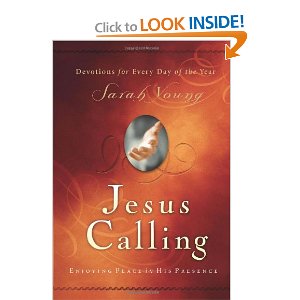
Jesus said, "My sheep hear my voice." John 17:27. This class will be a "community of practice" for those who desire to grow in their ability to hear His voice. "This practice of listening to God has increased my intimacy with Him more than any other spiritual discipline." says Sarah Young. We will use Sarah's daily devotional Jesus Calling as a spring board to practice listening prayer.
Class begins March 11 and concludes May 6. No class on April 8. Sundays at 11am in the Longs Peak Room.
Subscribe to:
Posts (Atom)